Finding the Right Neighborhood in Medellín
This post was reviewed and updated on .
Choosing where to live in the Medellín area is a door-to-door decision. A short distance on a map can hide a steep climb, a broken sidewalk, heavy traffic, or several transfers, especially if you use a wheelchair or prosthesis or live with chronic pain.
The Reality
These five names describe different kinds of places. El Poblado, Laureles-Estadio, and Belén are parts of Medellín. Envigado and Sabaneta are separate municipalities within the Aburrá Valley metropolitan area. That distinction affects which local government publishes safety, planning, and service information.
No reliable public data show that these areas attract most veterans, and no current official source ranks all five together by safety or walkability. Conditions also vary within each area. Use neighborhood labels only as a starting point; assess the exact building, block, and route you would use.
How Should You Compare Housing Costs?
Exact dollar ranges age quickly because asking rents, exchange rates, furnishing, building fees, and included utilities vary. Compare listings quoted in Colombian pesos during the same week and with the same number of bedrooms, furnishing, parking, and administration fees. Ask to see recent utility bills before signing.
Colombia’s estrato is a classification of residential property, not a rating of a person or a complete measure of neighborhood quality. DANE explains that it helps determine subsidies and contributions on residential public-service bills. Confirm the property’s estrato and what the rent includes, but do not use estrato alone to predict total cost.
Which Area Fits Your Daily Route?
Laureles-Estadio has many relatively level blocks near the valley floor. Estadio and Suramericana stations connect to Metro Line B. Still, curb ramps, sidewalk width, surface quality, traffic, and distance to a station change block by block.
El Poblado ranges from lower sectors near the river corridor to steep upper sectors. A listing described as “near Poblado station” may still require a long uphill trip. Test the route rather than relying on the neighborhood name.
Envigado is a separate municipality. Metro Line A serves its lower corridor, while many homes farther east sit uphill. Check the route from the building entrance, not only the distance to the nearest station.
Sabaneta is also a separate municipality served by Line A. The central and lower areas differ from developments on the slopes, so verify grade, sidewalks, and transport at the exact address.
Belén is a large Medellín comuna with both lower and hillside sectors. The Metro de la 80 is under construction; it is not a current travel option. Choose based on today’s routes and construction conditions, not a future station.
What about Sidewalks and the Metro?
Do not assume a route meets U.S. ADA design expectations. Medellín is improving pedestrian infrastructure, but an accessible station does not guarantee an accessible path from your front door.
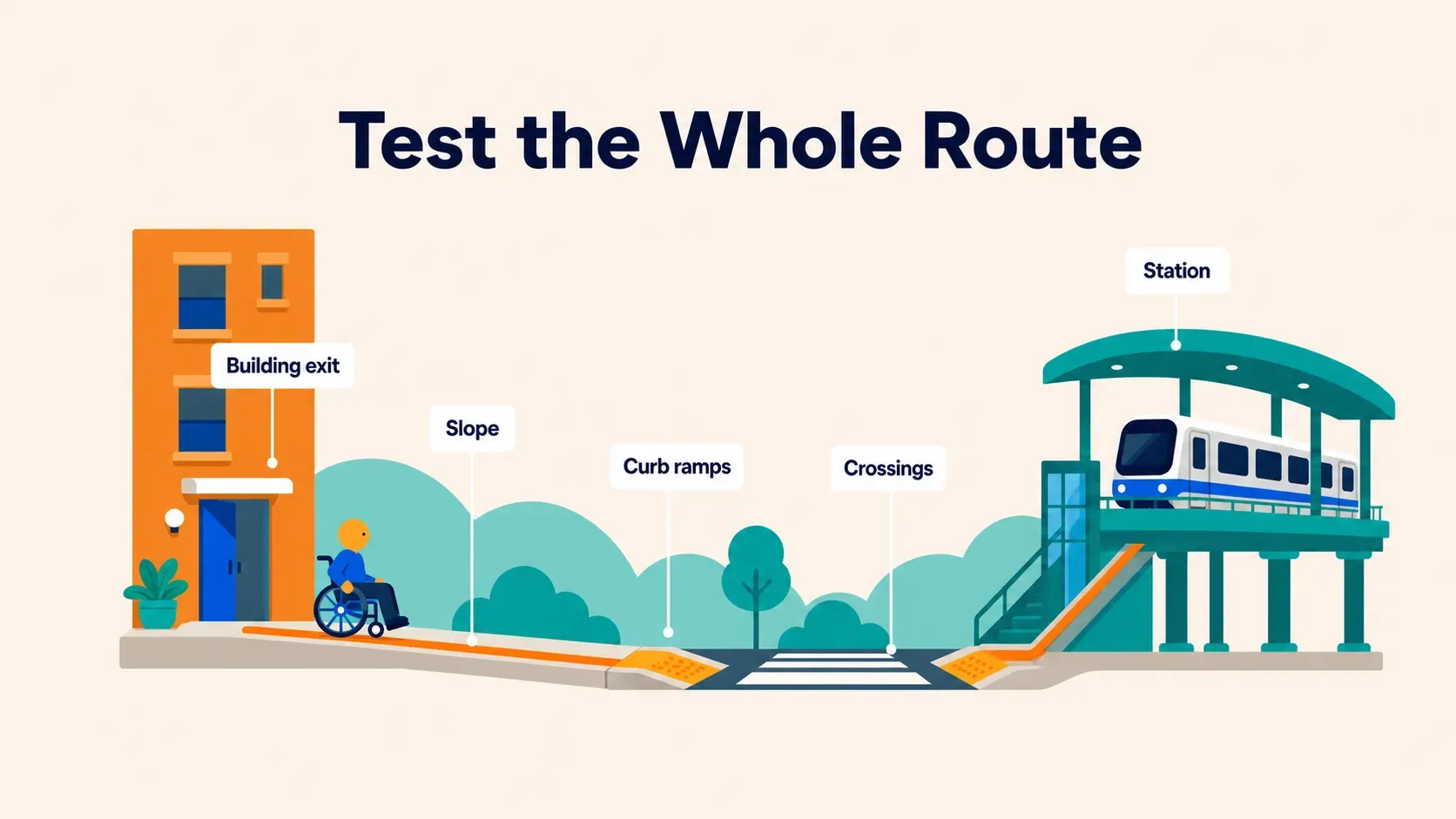
Metro de Medellín has been upgrading accessibility at ten Line A stations, which shows that access is still evolving. Before a lease or important appointment, check the official system map and service information. If mobility is limited, test the full trip with the device you normally use: building exit, slope, curb cuts, crossings, station entrance, platform access, transfers, and final block. Ask Metro staff about current elevator or platform availability.
How Should Safety and Local Impact Affect Your Choice?
Avoid blanket labels such as “safest neighborhood.” Medellín’s official SISC publishes weekly crime indicators for the city and its comunas, including Laureles-Estadio, El Poblado, and Belén. Envigado and Sabaneta report through their own authorities, so figures from different jurisdictions may not be directly comparable. Review current official data and visit the exact area during the hours you expect to travel.
Medellín’s City Council has linked tourism-driven short-term rentals with reduced long-term housing supply and higher living costs. It does not support the precise rent increases or foreign-resident percentages often repeated online. If you plan to stay, favor legal long-term housing, learn Spanish, and support neighborhood businesses. These choices do not solve the housing shortage, but they reduce dependence on the short-stay market.
Tips from Experience
- Stay nearby before committing to a long lease.
- Test essential routes in daylight, after dark, and during rain.
- Check noise, lighting, building access, curb ramps, and sidewalk obstructions in person.
- Map groceries, pharmacies, healthcare, and transport from the exact address.
- Compare current official safety data; do not rely on a building’s marketing.
- Recheck Metro de la 80 construction and route changes if considering Belén or Laureles.
Sources
- Área Metropolitana del Valle de Aburrá and GeoMedellín. Official municipal context, maps, planning, and geographic data: metropol.gov.co and GeoMedellín.
- Medellín SISC. Official weekly and comuna-level security indicators: Sistema de Información para la Seguridad y la Convivencia.
- Metro de Medellín. Integrated system map, station accessibility project, and Metro de la 80 project.
- DANE. Official explanation of residential property stratification and its role in public-service billing: Estratificación Socioeconómica.
- Concejo de Medellín. 2023 public debate on tourism, short-term housing, rents, and displacement: La gentrificación y la turistificación desplazan ciudadanos de Medellín.